Pages

December 28, 2012

my quest to see it all...

In April I sought out a quest to see it all. Or at least to see thirty-one new species of birds to reach two hundred life birds. As of Christmas Eve I am at 181. I’ve seen twelve new species since the end of April. Six of those species were quickly picked up in May during my first bird-a-thon experience where I birded with people who are much better birders than I am for twenty-four hours. A seventh was picked up at my trip to Mt. Auburn that I wrote about in June. The last five I saw this fall including three over Thanksgiving weekend. All in all I’ve seen nineteen new species for the year.

The Christmas Bird Count is still to come, but I don’t expect to see any more life birds. And although I didn’t reach two hundred life birds it has been a spectacular year for birding. I got to see my first Snowy Owl. I also saw my first Eastern Meadowlark and Horned Lark that I have been searching for, for a couple years now. Interesting enough I first correctly identified the Horned Lark in early November in a farm field by its call. A month later I got to see my first Horned Lark in a different location.
The biggest thing I learned this year was understanding the size of birds better. As I began getting interested in birding and for anyone that does, one of the first things you learn quickly is to generalize the size of a bird. For example, “that bird is the size of a sparrow or that bird is the size of a robin”. They are quick general identifiers to quickly understand what kind of bird you are looking at. This year I have been able to understand that concept and use it more thoroughly. For example the Black-capped Chickadee, White-breasted Nuthatch, and Tufted Titmouse frequent together in winter. They are all a sparrow-sized bird. But when you get down to it, the chickadee is a much smaller bird and the titmouse can some times look huge next to the chickadee.

Subsequently, where can I improve? I can improve in finding the unseen bird. As a birder this is pretty common. Birds are often found high in trees or blending in with rocks, grass or trees and often can be heard but not seen. Many people not searching for birds will never see many birds that are right in front of them. For me it will be learning more about finding birds that I know could be somewhere and finding them. This year on one of our annual trips to Cuttyhunk, a small island off of Cape Cod, we did not find any warblers. And although most of the migration had moved through already the likelihood that there was at least one warbler there was good and yet we did not see one. For me it will be learning more about bird behavior and techniques to find these often quiet and overlooked birds.
In my next blog I hope to share what birds I would like to see in 2013 and a recap of the Christmas Bird Count.

December 27, 2012

There is a whale in CT

If there is anything that could revitalize my blog it would be the recent tragedy in Connecticut. It seems as though everyone has a comment about the shootings. After forty-eight hours of people’s comments on Facebook, along with every news and opinion article that ticked along websites and on the radio, I was about ready to explode. I can be thankful I don’t have cable news channels. All the commentary reminded me that for every person that wants stricter gun laws there is another person with the exact opposite opinion who wants to arm principals and teachers and, if they could, the students themselves.

Much like political elections it seems that most people, but not all, are not only sticking with what they believe about gun rights but are more ingrained in their own ideals. Of course, a week after the tragedy people are still calling this one different – that it will in fact convince law makers to do something, unlike all the other mass shooting that have happened over the past decades.  This of course is true - it is different. Twenty six and seven year olds were killed (not including the adults). Their age is what is different. It’s what makes it different than the Virginia Tech shooting or other recent shootings.
In the wake of grief in Connecticut there are the normal people coming out and saying stupid things. People like Rick Perry, a public figure, telling the public government to stay out of it and not to have a ‘knee-jerk’ reaction. As if the public shooting of twenty children and six adults is somehow not knee-jerking.

Still, what’s even more pathetic? The religious community that controls the media – the mouths of Christianity. Judgment continues to be at the forefront. The Mayan apocalyptic firestorm feels more like Christian apocalyptic judgment of all the atrocities of this world, more than a Mayan prophecy.  Of course, much like Mayan prophecy, there is that church-that-shall-not-be-named in Kansas who feels they need to assert some god’s judgment upon everyone. In reality even the biggest haters of Christianity know that this group doesn’t represent the God of Christianity. There are, however, too many Christians in the media, politics, and in neighborhood churches preaching similar judgment on this town – just as they have when earthquakes, or other tragedies have happened.
My questions is this: when will this senseless use of God’s Word be stopped and people realize that we are acting too much like Jonah - turning our backs on God’s people? When will we as Christians be out of the whale’s body and in the city of Nineveh?

From news articles I have read it seems that everyone that knew Lanza were not surprised - making him an outcast to society. Even though mental illness probably had a role in this, it rings echoes of Columbine and other shootings. The judgment doesn’t lie in government or schools not being Christian enough. It lies on Christians and churches not being Christ-like enough – not being the light, the grace, the love of Christ in this world. We’re spending too much time in the whale’s belly and not enough time in the city of Nineveh.
We’re all God’s people. Whether you don’t believe in God, or whether you do and reject the idea that non-believers are also God’s children – we all are. 

We can all make steps in this. It can be as easy as loving you annoying coworker or that rude driver. Or it can be as difficult as loving that Politician that you hate, or that group you hate, or that kid that nobody seems to talk to. We can all have our views on holding our Bible in one hand and a gun in another. But we cannot hold the truth of God’s love away. We must be the love that God intended us to be.

June 3, 2012

trip to mt. auburn


For me, learning that Mt. Auburn Cemetery is a birding hotspot is no surprise. To others, it’s just another oddity to birding culture. The typical stereotype for a birder is, well, rather old and dull. More recently with the book-turned-movie The Big Year more stereotypes are forming about birders. Some of the stereotypes are true and some of them not (at least for most of us).  All-in-all the general stereotype for birders has become a picture of a strange person, overly obsessed with birds. It’s pretty much like any other hobby or obsession. My trip at the beginning of May was nothing less than strange and obsessed.

If you have never heard of Mt. Auburn it is a large cemetery in Cambridge, just outside of Boston. It’s not a completely typical cemetery. It is filled with rolling hills and steep climbs along with a few ponds scattered throughout the property. It’s also an active cemetery. For birders, it is the perfect place to go birding. First, it is an oasis for birds. In the midst of building, homes, and concrete - this cemetery is a bullseye for migrating birds looking to land and grab a meal. The cemetery provides a variety of trees, mostly deciduous. The trees are not too small, but not too tall either. The hilly terrain also makes it easy for a birder to see a bird in a tall tree than it is at a lower level. The cemetery itself provides a clean walkway throughout the grounds. In most circumstances a forest is hard to walk through with heavy undergrowth. This way you are not confined to the trail.

The day started with eleven of us walking around the cemetery. There were many other groups and individuals there as well. At many points people joined our group, at other times we joined other groups as a new bird was found in the area. For most of the morning we were chasing down a rare bird: the Kentucky Warbler. The bird’s migration does not include travelling this far north. For us, it was a lucky day that this bird had gone too far. It’s a pretty bird. Yellow underneath and olive green on top. Its head is yellow with olive green and has a black eyestripe wrapping that makes it unique to most other warblers. For me, it was a triumphant day when the bird finally ventured out of a set of trees to perch on a bare branch. That was it. That was the view. It’s that moment that turns someone just interested in birds into a real birder.

It’s the moment I experienced three years ago when I first went on a bird walk in Chicago. Now, I’ve only become more strange and more obsessed. On my quest to reach 200 this year I was eager to knock a few off my list in Mt. Auburn. In the end, it was just the Kentucky Warbler. I did see many birds I hadn’t even seen since Chicago like the Nashville Warbler and Northern Parula. For others it was the first time I would see them this year like the Baltimore Oriole and Rose-breasted Grosbeak. We did miss out on a few birds that we heard there that day like the Canada Warbler and Northern Waterthrust. Both would have been lifebirds. But really, it’s not about the numbers. The trip was great! We got to see a lot of birds and have a lot of fun doing it.

Magic number: 29

May 30, 2012

forward migration

First things first – a trip to the Manomet Center for Conservation Science for some bird banding. The Center, located in Plymouth, MA, looks out into the whole of Cape Cod Bay. Not well marked, the Center is not the easiest place to find. Once you are there though, it is the place to be. The Center is high on a cliff looking over the bay. It makes it easy to look below to see Great and Double-Crested Cormorants along with sunning seals. Off to the right is the town of Sandwich and viewing from right to left you view the whole of Cape Cod Bay.

The center was just starting the new bird-banding season. Although we didn’t get to see the amount of birds during peak migration in May we did learn a lot from the staff at Monomet. The center has been banding around fifty years. It was amazing to hear why and how birds migrate and what the center and others are doing to help conserve land so birds will continue to have places to migrate from and to and all places in between.

During the banding season the staff go out every forty-five minutes to checks the nets. The nets are mist nets and are probably fifteen yards long. There are fifty on the property. We didn’t see many birds while we were there. We got to see two Blue Jays and two White-throated Sparrows. The birds, along with being banded, get weighed and measured.

The most interesting part of the morning was the stark concern over climate change and loss of land not only in breeding and wintering grounds, but also all the migratory lands between the two and the concern over land conservation. Between the two issues it is not hard to imagine that many birds will have a hard time surviving.

This day was a reality check for many birders. We need to not only take care of our planet, but look forward to creating areas of conservation so the birds, animals, and land we walk on is here in the future.

[photos coming soon.]

April 23, 2012

my quest to see it all


In a quest to see it all – or, well, a quest to see more of it - I have set an ambitious goal for myself this year. I want to see 31 (more) life birds for the year. More - because I already have 7 life birds for the year.  With 31, I would have a life list of 200. Right now, I stand at 169.  

The seven new life birds this year aren’t just any ordinary birds, either. The Eastern Meadowlark, a bird I have been after for two years now. While trespassing through a farmer’s field we spotted the splash of yellow of the Meadowlark. I also saw my first Northern Pintail and Harlequin Duck – two of the loveliest ducks around. I took part in the Snowy Owl invasion this winter and saw my first snowy on a sea rock on a beautiful March day in Rhode Island. And lastly, I saw my first Pileated Woodpecker, my white whale, just two weeks ago. It would be a satisfying year if it stopped there – but it won’t. I’m on the quest for 200!

How do I plan on getting there? I hope to start in two weeks as I go up to Mt. Auburn, a birding hotspot in Cambridge, Mass., with the Bird Club. It will be the real start of the spring migration for the area, and a great time to see warblers and the like. The week after I will be taking part in a 24-hour bird-a-thon with MassAudubon. I not only hope to see many birds, but to meet other birders in the area. In the summer I will be taking a trip with the family to Michigan. Although we’ll miss the famous Kirtland’s Warbler, we should be around to see other warblers and other birds starting their fall migration back to warmer weather. Lastly, in the fall I hope to finish up the year with some great bird walks on the quest for 200.

For now I am at 169.

January 19, 2012

balanced birding

When it comes to birds I’m becoming more obsessed. It’s really become my passion and what I want to do with my time when I am not with my family or at work. I’m not sure how equally busy people do it. With 8 hours at work each day why would I want to spend time away from my family? This year – I’ll be looking at that balance as I fuel a passion for birding and a desire to spend more quality time with my family. No, this isn’t my New Year’s resolution. This is every birders’ nightmare: I’m stuck at work and can’t look at birds. Even beyond that for me is wanting to use the little time that I do have (that is, the time I am not sleeping or exhausted - I have a 4 ½ month old) birding or thinking about birding.

The great thing about birding is that you can see anything anytime anywhere. It can be that great. That is also what makes it so difficult – to find anything in the trees or the bushes or out at sea. It takes more than a keen eye to identify a bird sometimes. For me, I want to get better at identifying birds and in these cold winter months when migrants are enjoying South America or just the Miami sun I’m eagerly waiting their spring arrival.

December 2, 2011

crazy like your baby


As a new parent I’ve noticed that our culture has created a world where we take care of babies like crazy people. No? Don’t believe me? Here are my four reasons why. You can make a judgment after.

1.    Back in the day people put their babies in these crazy dangerous contraptions called cribs. People wrapped up their babies in blankets to keep their baby warm and put toys in the crib to help the baby entertain himself when need be. Today, the “crib” is a highly sophisticated place to keep your baby safe.  That includes having nothing in the crib with the baby. The toys: a danger. Even blankets are considered choking-hazards. Simply put, the only thing in the “crib” is the baby. The baby is kept in a safe “crib” or “room” alone with nothing to harm himself. Does that remind you of anything?

2.    Since parents are not allowed to keep anything in the crib with the baby including blankets, the popular alternatives today are cocoon blankets. You know, those blankets that you wrap around your baby to keep him warm. The blankets that have excessive amounts of Velcro to keep your baby from getting his arms out of the blanket. In adult terms, this “blanket” is simply called a straight jacket.

3.    In a recent NPR story many parents today are going to their pediatrician to demand drugs for their babies reflux “problems”. The story stated that parents wanted similar drugs that helped adult reflex for their babies. It concluded with the advice from a doctor to parents, suggesting that they not depend on drugs, but first change the baby’s diet. The doctor affirmed that this worked most of the time. The alarming part was in the middle of the story when NPR stated that research on the infant reflux drugs indicated that they didn’t work any better than placebos or sugar pills and in some cases aggravated the problem. In a world where we are increasingly giving people more drugs for their problems, this story substantiates the idea that in some cases we are helping people in the wrong way.

4.    Back in the day… Can I use ‘back in the day’ again? Anyway, back in the day people used to just throw their kids in an open seat in the car and just drive off. Not anymore. Babies have to be put in the back of the car, facing backwards, all locked up and secured. I find it eerily similar to this.

November 21, 2011

crazy compassion, or lack there of.

Have we all gone crazy? Has the world lost its compassion? Is ‘God dead’? In this brave new world these are the questions that people are asking of us. Has the world lost its compassion? In September of this year a crowd cheered for the death of another human being who theoretically couldn’t afford health insurance. Similar people are calling for the murder of illegal immigrants who cross into the United States. And on Fox News this past month Ann Coulter has brought us straight back to the age of slavery! (Please note my exclamation point. I don’t use these often.) She claims, “Our Blacks are better than their Blacks.” This, the exact propaganda rich slave owners’ declared for their right to enslave African Americans and promote racism in the United States.  

All these obscenities make it feel more like 1811, not 2011. Ann Coulter’s directly racist comment, uttered to make Herman Cain look better than Barack Obama, is an injustice to the decades of work African Americans have put forth to stop this direct racism. Furthermore, when people want to see illegal immigrants murdered because they cross over the United States border for a better life, it is a world that doesn’t reflect modern civilization, but a world in which we used to chase and murder thousands of Native Americans from what was their land. The New World invaders are now mad at the new invaders for coming into a land that they themselves took from someone else. (Invaders: a term used by many of the Right to describe illegal immigrants.)  

And let’s not leave the obscurities to politics. Just last week after the firing of coach Paterno at Penn State, many of the students rioted not for the abused children but for the firing of their legendary coach.

Where is the compassion? Herman Cain who is now dealing with sexual harassment accusations, although an unrelated topic, has taken a similar stance when addressing the situations. Cain didn’t fire back at Coulter to boast that all African American are equal and none are of lesser quality. He didn’t take any higher ground – something that not only demeans himself, but affirms Coulter’s comments.

In all of this can we claim that humans are more civilized or enlightened? People are valuing such insignificant and finite objects such as money, sports, and politics over the life of fellow humans. The basic needs of life- health, shelter and safety - have been abandoned. Maybe the world has gone crazy.

October 12, 2011

finally a blog


I’ve skipped over about seven weeks of becoming a new parent to go straight to apple picking in October. Why?  Because I haven’t quite figured out how to write about it. Instead, I’m going right to apple picking. Last weekend the three (3) of us went apple picking. We found the closest place, which happens to be about forty minutes away and pick some apples. It is one of our favorite pastimes. We also happened to miss the annual family apple picking in September. We went to Acushnet, which is part town-next-to-New-Bedford, and part farm country. I associate Acushnet with winding country roads, their Country Whip, and the town where we can apple pick and cut our own Christmas tree. 

The place was surprisingly busy. It was also surprisingly warm and sunny.  The parking lot had four long rows of muddy spaces. (It had rained the night before.) Right away Isaac was hungry. We decided to feed him before walking to the entrance. Two seconds later a couple cars pulled up next to ours. They looked odd and none of the passengers were getting out of their cars. After a few moments (aka five minutes) of seeing if the people were actually going to pick apples or just sit in their cars I decided to kick the car in reverse and find a more private parking spot. We found a more secluded spot after driving around to the front again and finally we were ready.

After skipping around to avoid the mud, we reached the big barn-like structure at the entrance. Key word being “like”. In the background you could see the apple trees. In front of the barn were picnic tables where people were eating the popcorn and other treats they had bought. The three of us went on into the barn. Right up front was a lady handing out plastic bags that you could put your apples in. Right there I should have known this wasn’t going to be good. Everyone knows you aren’t supposed to go apple picking with grocery store plastic bags!

Once inside - plastic bag in hand - I looked off to the left where all the goodies were. No donuts! How can they have no donuts? The two go hand-in-hand. Apple picking and donuts! Strike two. I walked out of the barn discouraged but not broken. Right away were the three rows of pumpkins. Not a spectacular display of pumpkins but I know we would find an adequate one for the house from what was available. But that would be after the apple picking.

Walking down the dirt path to the apple orchard was the highlight of the day. To the left was an empty field with a hand painted sign for “Potato Land”. No digging – use your hands. Definitely never seen that before. It was something unique. Alas, the hot sun was getting to me and I wanted to press on to the shaded apple tree area.

The trees (or, should I say the ground) was full of apples. It was clear that the farm had been hit hard by the hurricane that went through at the end of August. It was hard to fill half the plastic bag. I’m not sure how all the other families were doing it. It was disappointing, but it wasn’t the farm’s fault. On the way out we picked out our pumpkin and got in line for some apple turnovers and cookies. Very good.
All in all it was a good day. We learned a lot. One: try not to nurse in the car next to weird people. Two: always try out potato land. Three: hurricanes impact crops. Four: hot weather for apple picking is an oxymoron. Five: always take photos even if you are hot and looking out for those weird people from the cars.    

August 8, 2011

a holiday from church


Last week at church there was almost not a service, or at least that is the way it looked. The service usually starts with a hymn. Instead, a gentleman (who we would find out later would be leading the whole service) stood up at the front and proceeded to tell us in the most lugubrious voice that the guest pastor who was supposed to be there in place of the current pastor who was on a month long vacation was ill and could not make the service. They had just found out that morning so they would be piecing together the service on such short notice. And pieced it would be.
We never did get to the opening hymn – which may have been a good thing because later on we would sing an awful version of “Amazing Grace”. After the little speech we somehow got through the liturgy until the sermon. The same gentleman, a paid administrator at the church, decided he would be the one doing the sermon. I guess there was no one else available - or more likely - no one else was asked to help lead Sunday worship or the sermon. I’m not quite sure how there could not have been someone with more experience leading. Was there not a second in charge, or third in charge? Was there not a deacon or extraordinary leading in the church on this Sunday? Apparantly not.
Now I’m not saying church has to be done a certain way. On the contrary. It was actually really neat to see the congregation go through the service without its usual leader and to worship corporately anyway. There wasn’t someone “qualified” to bless the communion, but we did it anyway. It was out of the box – and it showed that doing church can be done in many different ways.
This all leads to the important part of the day: there really should have been a leader giving the sermon that day. Why? The reading for the day was the feeding of the 5,000. Standing at the front of the church he said he didn’t believe the feeding of the 5,000 happened but that its a good life lesson. It is an insult to the real miracles that happened 2,000 years ago and to the Savior and Lordship of Jesus as God, and to the general Christian belief in God. Later he claimed he believed in Santa Claus – pronounced “Santy” Claus. (In all fairness he meant the general idea of Santa Claus as a way of giving around the holidays.)
In the end what was a good service was indeed church gone wrong. I hope no one went away with anything from that un-thoughtful sermon.
---------------------------------------------------
In related news. We first went to this church at the beginning of March. There were lots of kids and it was Lent. It truly was in better times. Now I’ve noticed throughout the entire summer that all the kids (including their parents) are no longer attending during the summer. They’ve taken church off for the summer. For me this is a complete knock at God and the Christian community.
In more related news. The other church we were interested in finally got a new pastor which means we can try that church again. Which we will be doing as soon as possible since the other church seems to be taking a holiday from God.

July 29, 2011

close to home


A week ago, Norway had a devastating tragedy happen to them. For me it brought to light that even countries as far north as Norway have issues and conflicts with immigrants and multiculturalism. Secondly, it was a reminder that a madman will kill until no one is left. There is clearly, though, a larger issue at hand. That was apparant when I learned that the killer was captured and did not kill himself. He wanted to start a revolution against multiculturalism.

It’s an idea that is not far from Nazi ideals. In America it’s not far from the modern day KKK and neo-Nazi movement. Luckily, these groups have not created such carnage in years. I think there is a much more frightening thing going on right now in America that is really not that far from what happened in Norway.


In places like the state of Arizona they are creating laws to do almost whatever they can to keep immigrants out. In NYC the city is divided over whether to let a Mosque be built near the site of 9/11.  And all over the United States people have a similar hatred (a strong but accurate word) for immigrants and Muslims (among others). This really isn’t a new attitude. However, the extreme or counter-cultural ideas are now becoming more mainstream and normal. A quote from a normal “Christian” on Facebook:  
  
“If you cross the N. Korean border illegally, you get 12 yrs. hard labor. If you cross the Afghanistan border illegally, you get shot. If you cross the U.S. border illegally you get a job, a driver's license, food stamps, a place to live, health care, housing & child benefits, education, & tax free business for 7 yrs. No wonder we are a country in debt. Repost if you agree.”
There are a couple alarming ideas in this post. First, it’s stating that the debt problem is coming from the over abundance of illegal immigrants. Ironically, illegal immigrants have been providing cheaper services at hotels, restaurants, and the like for years.  The same capitalism these “legal” citizens believe in has only created a space for cheap illegal labor over American labor. The idea of debt is also a jab at the Democrats, which as the NYT has pointed out is less of a Democrat problem and more of a Bush era problem of cutting taxes to only the rich and many years of war – two things Republicans keep endorsing as good things. It’s also sad to think that people have forgotten just how bad it was during the Bush era (also proved by the NYT graph) and how much damage was caused especially to the economy, and yet still think Bush is a saint compared to Obama.

Second, this Facebook post is endorsing the idea of killing people for being immigrating illegally. The idea is not far from those of the tragedy that happened in Norway not 4 weeks afterward. This person - perfectly “normal” - is saying that the death of people is better than life. The ideas of the United States used to be far from this of course. Just take a look at a quote on the Statue of Liberty: “Give me your tired, your poor, your huddled masses yearning to breathe free.” For many American’s this no longer applies. It was nice when white Europeans were immigrating, but now that it is mainly immigrants from places like Mexico the same attitude does not apply.

That isn’t to say that some type of immigration reform isn’t needed. I’m just not sure death is the answer. Unfortunately for us the Norway killer’s idea of revolution has already started without him. I’m sure this person on Facebook would still post the their message and would want people to repost it.   I am equally as sure that this person – and the many who agree - would also like the U.S. to default on their credit to pay for their bad spending habits.  Habits that, again, ironically don’t come from the current president, but from the Republican president before him who spent billions on national defense while cutting taxes only for the rich and corporations. For the rest of us, we can only hope that the killer’s revolution raises an alarm about the importance of valuing all people. 

July 27, 2011

3 weeks left


baby boom

With the increase in social media it seems easier for people to get jealous, sad, envious (or happy) about others people’s fortune of having a baby. Back in the day people’s circles were closer. When you learned about someone getting pregnant or having a baby it was either from someone you directly knew or had weekly contact with, or a relative of someone you knew like a co-worker or family member.


Today – you can know just about everything about anyone you have ever met. Now you know when people from high school or college or from the previous town you worked in are having a baby. In some ways it is really neat. I get to learn about the lives of people who - after high school or after I moved away - I may never have heard from again.

In other ways it can be tough. For someone who has just lost a baby, is barren, unable to adopt, or is undergoing fertility treatments, is something like Facebook good or bad? Does it bring sadness or hope? Both? There seems to be very little tragedy on Facebook or at least with the 300+ friends that I have. The statuses of people either contain good or happy things (30%), pointless things (65%), tragedy or sad (5%). This is all anecdotal of course. I think it points out something crucial about social media websites such as Facebook and Twitter – they aren’t building better relationships.

One way I’d like to see if a church is really authentic during their prayer requests (or Sunday School, etc) is if people give real prayer requests. What do I mean? For those who haven’t been to church before or have not witnessed this in many churches prayer requests can be “surface-y” and vague and people don’t show any real meaning when they share a request. Prayer requests that are authentic or real involve the good, the bad, and the ugly.

Without that on Facebook we can never relate to those who may be grieving, only to those with the happy life. For me I think it would be difficult to be grieving and use social media as a tool (at least Facebook). I think the same can be said about similar situations such as job loss. Back in 2009 when everyone seemed to be losing a job little of it was on Facebook.

In some ways I think social media is bringing people closer than they ever would have been otherwise. In other ways it will never replace, nor do I ever think social media sites ever intended it to replace, real authentic relationships. In still other ways I think social media can be a tough place to be in the midst of such surface-y relationships. But hey, that’s just me.

July 25, 2011

not suitable for suburbanites: a review of death by suburb


I haven’t had a book review on here in a while, but couldn’t resist writing about one I read recently. The book in question is Death By Suburb by Dave Goetz. My first confession: I didn’t finish it. Or to be more precise I couldn’t finish it. I was so repulsed by the writing I finally had to say I’d had enough. I received the book a few years ago from a free bin or something like that. After closer examination of the book I realized the book was discussing how to live in the suburbs and still be a Christian, not how to get out of the suburbs because they are ruining your life. As a result, I put the book off. I finally got the courage to read the book that said the ‘burbs were okay - something I was not okay with.  

My worst dreams were realized when I began the book, but Goetz kept making a few good points, and I would keep reading. The basic premise of his book is six “spiritual” practices to help you really live in the suburbs. I’ll get to the practices in a moment.

Of course the whole idea of the book doesn’t mean you have to live in the suburbs. The book more reflects the moods of a typical middle-class American. If someone has so much money they aren’t worried about their neighbors new BMW, because they already have one, or aren’t worried about their mortgage payment because they paid cash for their house this book isn’t for you. Neither is this book for you if you aren’t worried about your kid’s education or grades because they are already on a fast track to Harvard. This book also isn’t for you if you aren’t worried about this month’s rent, but worried about this week’s rent, or you are worried about sleeping in your car, or what food you may or may not be able to afford to eat today. Basically everyone else: this book is for you in some way – that’s why the middle class is so big.  It encompasses a lot of people.  

The book touches on the aspects of the toxic life that is suburbia. The life of having to have the biggest SUV (or maybe the hippest new Mini or Prius). The life of having 2.5 kids and a yellow lab. The life of green grass and great equity. The life of kids that have good grades and that are good at athletics. Goetz actually makes some important points highlighting the fact that we shouldn’t be envying our neighbors in this way. The envy causes us to have a mortgage we can’t pay for, high hopes for our kids that will never be met, or a SUV so big and with so little MPG that you actually have to continually fill your car with gas (much like a plane being refueled in the air).

This book is more about how not to be green with envy than anything spiritual or Christian. Case in point is Goetz’s third of his eight practices: friendship with the poor. It’s a practice that will keep you from envying your neighbors’ life Goetz states. And this is precisely where he goes wrong. Goetz goes on to write that to help yourself from envying your neighbor’s house, car, kids, or wife, you should instead look at the poor sap down the street with a junky house, a beat up car, dumb kids, and a wife he just can’t seem to get along with. The idea to not envy your rich neighbor is great, even the idea to not think about yourself or your ego. But of course looking at the poor neighbor down the street is only going to boost your ego and pity him. An idea I don’t recommend. There is nothing good about hanging out with the poor to make yourself not be envious and is only cruel when you have alternative motives.

Secondly, Goetz goes on to the subject of your kids. From birth parents are always saying their children are the best and the brightest. Of course, that’s fine until you realize they aren’t the best or the brightest and then it is just a letdown.  A true hit to your ego and parenting skills for sure. Goetz basically says you should be okay with your kid getting “C’s” or being so un-athletic they can’t even make the JV team.  He suggests that you should be okay with it because if your children are getting “A’s”, its likely that you are only happy because it makes you look better at PTO meetings.  The only problem is that this really isn’t the core problem, is it? I mean, is the kid trying? If the “C” he gets in Algebra is his best, then awesome! Why not be proud? But, if it isn’t than should we settle? This isn’t about being envious or proud this is about wanting your child to learn. Because in the end that is what it is all about and what is most important.

I think what really got to me was Goetz’s take on being a missionary. Today, much of Christian international missions are more about the missionaries themselves than about who they are helping. Not everywhere, but in most cases. Today, mission work is about partnerships and and building relationships. While working for the missions department of a small Christian denomination I learned that we were not going over to save the world, but to work with other Christians of the same denomination in other parts of the world. In places like Sudan and Nigeria there were already Christians, and often in bigger populations than in the States. There were also people who were capable of building wells for water, homes for families, and churches for villages. There was no need to have white Americans come over and do what they wanted to do, because the Nigerians had the same skills. It therefore was not about saving or building, but about relationships and learning.

This is the same with short term mission trips. A group of church goers that travel thousands of miles and spend thousands of dollars each to go to a small village where they spend a week building something are not going because the native people cannot do it themselves, and it certainly isn’t for the money. It would be wiser to use all that airfare money and give it directly to the building fund or other project. The reason of course is for the experience - what the church group learns and gains and can bring back to their church.  

Back to my main point. Goetz meets a lady at a wedding that recently came home for a furlough as a missionary. He asks the lady how it must be so strange to come back to the States and just be okay and fine with how everything is.  The lady replies back that when she is in Africa she is in Africa and when in the States she is in the States. She learned to disengage. What!? And Goetz’ lesson from this?  That we should live according to where we are.  When in Rome and all that.

As if we should ignore the blatant health problems in one country while we are enjoying the blatant greed of another country. How could we ever be the same? How could we not want to change the world? How could we not beg our rich neighbors for all their money so we can give it to a few who need adequate healthcare or quality drinking water?  These are fundamental needs that we can easily take for granted.  How can we not be thankful everyday for the amazing blessings we have and not want the same for our neighbor?            

I don’t want to disengage from my neighbor – I want to love my neighbor whether he is a millionaire who I despise with a big gas guzzling SUV or a homeless man who smells and goes around collecting cans around town. I can’t just cross the street or look away from these people – I must be their neighbor.  

Goetz misses the mark in this book. Maybe he has been engulfed in the suburbs himself too long. His writing is like confusing Aristotle for Pauline’s ideas. Although they may seem similar in some aspects they are far different and engulf opposing worldviews. We can’t settle for Aristotle when we have Paul. We can’t settle for Goetz when there is so much more out there.

July 18, 2011

apple...apple...apple...


There are a few lessons I’ve learned so far before becoming a parent. 1) People, whoever they are, however smart they are, wherever they are will give you advice about how to raise or take care of your baby. A lot of it… are things that a certified nurse is telling you the complete opposite to do.  2) My life will never be the same again, and it’s a good thing. I’m not sure why people always have to add “and it’s a good thing” after they say, “It’s going to change your life forever.” Once people here that you are pregnant everything bad about children and babies comes out through the whole of history. It makes you wonder why people even have babies or that the Shaker movement never became more popular.

3) I’m not sure what stage of raising a child is the most difficult. Is it taking care of a newborn, getting through the terrible 2’s, trying to teach a child how to behave in the world, trying to keep your pre-teen from stalking the latest pop idol, or hoping your teenage doesn’t burn down the town? 4) Babies don’t come with instructions or warnings which is strange considering everything else does in the world. 5) People have literally run out of names for their babies. When and why did people start naming their babies apple or seven? Seriously? Would you want that name? Unique? Yes. Stupid? Even yesser!

In the end though, the best way to figure out your child’s name is to test it out. While camping in Illinois a few years ago, a father taking his children camping on his own was having some trouble. Across the camp road all you could hear was… “Joseph…  Joseph… Joseph… Joseph… Joseph… Joseph… Joseph” I think you get the point. The test works. Let’s try it with apple first. “Apple…  Apple… Apple… Apple” I’m imagining a person staring at an apple on a picnic table trying to call it to him or herself. Were you? Again let’s try it with seven. “Seven… Seven… Seven… Seven… Seven.” I think if I heard a person saying this over and over again in a campsite I might think they escaped the local mental hospital.

Of course I am pondering this same test as we try to pick a name for our child.

July 12, 2011

settling into a church


It’s been a while since I’ve written about searching for a church. After a long hiatus in June due to moving and painting among other things we got back in the swing of searching for a church. We returned to the church from way back in week 1 at the beginning of March. It was a promising church with many possibilities. After experiencing many other churches (including one church that seemed that it might be the church to go to, but ended up being the craziest of them all) we have fallen back to the church from week 1.

If anything it feels like we have settled for this church. Not because it is a bad church. But because we know what we want and we know the possibilities out there. The other part about shopping for a church now is that it is summer. And for anyone that has gone to church before during the summer months it is a lot different than the rest of the year. Many churches go from two services to one. The pastor, many times, is on vacation along with half of the congregation. Overall there is a different vibe to the church. It’s not good or bad it’s just different.

With that said, how do you know what a church is like if it is different during the summer months? For now this is the best we’ve seen in the area. We’ll continue to look, but at the moment we are settling into a church.

July 6, 2011

hot election

With the summer heat upon us I thought I would bring some hot topics to today’s blog – the election. I’ve broke it down into topics in three segments on why I think and don’t think Obama will be re-elected. I don’t really understand the American public and much of its voting practices, but it’s fun to think I do.

Why he might lose

ECONOMY – Lack of recovery and return on stimulus

At the beginning of November this may be the only point voters really care about. With an economy that’s been busted way before Obama has been office, it seems (to me) that the nation is looking for Obama to fix it. If the economy doesn’t improve a significant amount by Election Day I don’t think Obama will get re-elected. The days of Roosevelt economic policies are no good anymore. With the government’s spending at a max does anyone want the government spending more money for a recovery?

JOBS – Unemployment is still too high

If the economy doesn’t sink Obama in the election, jobs (and next on the list gas prices) will. Although unemployment is down, and the job growth is better than the job decline of his predecessor, the job market hasn’t improved well enough for the voters.

GAS PRICES – Remember when

It was okay to reelect a president when gas prices were high when the vice president was so influential in the oil business. Now with a recession it is just harmful. With no relief at the pump in a while, Obama can only hope that opening up U.S. oil reserves will help, not hinder him at the polls. Republicans? They are already blaming Obama for high gas prices just as Democrats were doing to Bush eight years ago.

FREEDOM – Fear of the red

Who really knows how many Americans think Obama is a socialist or communist. Various polls range from around 30% to anywhere around 55-60%. Considering he compromised to continue to give tax breaks to the richest in America that’s a very high number. Fear that Obama is a communist or works with many communists is one of many misconceptions that Obama’s administration has to deal with on a daily basis.

WARS/GUATANAMO BAY – Speaking of promises

One wave that Obama rode into his election was that he was going to end the Iraq war and close Guantanamo Bay. Iraq? It’s ending sometime, but much slower than anyone probably thought. Guantanamo? In a failed attempt it looks like Guantanamo will be staying open. What about Afghanistan?

IMMIGRATION REFORM – Kick them out… kick them out… all out!

In the end this topic won’t make or break many votes. For both sides though immigration reform hasn’t been changed or challenged. Anyone looking to vote solely on immigration reform may be upset at Obama. In the end though, Republicans don’t offer a better alternative.

THE ISSUES – just not getting done quickly enough

When you say you are going to bring a soda machine into the school you have to deliver. The hope and enthusiasm that Obama brought to many voters has left them upset at many things they thought would happen. Although he is the President there are still so many check and balances that you can’t blame Obama solely on not being able to deliver on all his promises. To see how Obama is doing on all his promises go here.

BAD PRESS – Who says any kind of press is good press

In 2006 and 2008 Democrats seemed to take control, and to me it looked like Republicans were going to struggle for a while. Not only did they do a complete 180ยบ in 2010, but have even created bad press to the masses leading up to the 2012 election. The Obama administration has not been able to combat all the bad press with many of the good things the administration has done to both independents and Republicans.

CHANGE - keep the change you filthy animal

People afraid that the Obama administration is going to take away their guns, money, and freedom have put on a full scaled launch against Obama. Ironically it has been the banks and other business that they have been deregulating for the past 30 years that have been taking the most money and freedom from them.

Why he just might win

COMPROMISE

One way to win is to compromise. I’ve seen Scott Brown do it in Massachusetts, and Obama can only hope that independents see that he can work with both Republicans and Democrats. Obama has shown considerable compromise in taxes, in a bi-partisan cabinet, and others. He really is a centralist, but nobody knows it.

DADT

It’s not going to change the outcome of the election, but the repeal of the ‘Don’t Ask Don’t Tell’ policy is a step that many Americans see as good.

START security treaty

The treaty with Russia shows that Obama can work with international leaders and work toward a nuclear free world.

AUTO BAILOUT – Vroom vroom

Republicans hate the auto bailout. And it’s not something you want to see a government do all the time. In the end though not only did the bailout save companies like GM and Chrysler, the many suppliers that work with those car companies, and the thousands families who depend on the car industry it actually was a good “business” move for the U.S. government who made money off of the bailout.

TEA Party

The TEA Party keeps growing in popularity. Unfortunately for Republicans the independent voters they are trying to sway aren’t swayed like TEA Party Patriot like Michele Bachman. The Republican Party, if it really wants to win the election, will have to have a more central candidate unless the Republican Party wants another debacle like the TEA Party Patriot, Christine O’Donnell in Delaware.

I’m on the fence

OBAMACARE

The fact that the new healthcare law has been coined “Obamacare” makes me think that it will hinder not help Obama’s election campaign. On the other hand there are many good things about the new law including:

1. Eliminate lifetime limits on insurance coverage
2. Prevent health insurance companies from denying coverage because of a pre-existing condition
3. Allow young adults to remain on parents' insurance until age 26.
4. Provide subsidies for individuals and families and are not covered by an employer to purchase their own insurance.
5. Creates healthcare exchanges for uninsured people to purchase coverage at competitive rates.
6. Gives people on Medicare new access to free preventive services such as screenings for cancer and diabetes.
7. Closes the "doughnut hole" gap in Medicare Part-D by 2020.
8. Slows spending increases for Medicare beneficiaries to 2% per year, from the current rate of 4% a year.
Of course many of these changes won’t take place until after 2012 election which makes many of the good things about the law unsubstantial to voters.

What won’t matter

Reagan’s poor economy verses Obama’s poor economy. Some think that because Reagan won with a poor economy that Obama can do the same. It was a different era and a different mood of the country. I don’t think people can depend on this comparison to think that Obama can win.

A face to the Republican nomination. As of yet, there is still no strong face to the Republican Party. The people who are going to determine the election don’t care if there is a face or not. They want the best person to improve their lives. And whoever presents the better case will win.

Osama bin Laden. It makes Republicans not question Obama’s leadership for about 3 seconds. Those 3 seconds are over. With the rest of the country it has had a bigger impact on the view of Obama. In the end, no one will remember this in the voting booth in November.

Other impacts

Besides the economy the outcome of congress voting on raising the debt ceiling in time or defaulting may have a huge impact on how voters view Obama. By the U.S. defaulting it creates a huge problem for the U.S. In terms of the election it creates animosity towards both sides of congress, but a bigger impact on the President.

Overall I still think the election is a wide open race as to who will win. Obama has a lot riding on the economy and gas prices. If they both don’t improve significantly in the eyes of American voters I’m not sure he can win the election. Sometimes disappointment, disapproval, and disdain bring out the most voters as we saw in both 2006 and 2008. I’m not sure Obama can depend on his supporters to come out even more as they did for Bush in 2004 to re-elect him. He will need to re-convince many of the same independent voters he won over back in 2008 to win.

June 28, 2011

We're #1

We’re number 37! We’re number 37! We’re number 37! Every four years the U.S. is able to chant “We’re #1!” during the summer Olympics. Let’s face it: the U.S. dominates the summer Olympics. It is easy to get caught up in American’s need to always be number one. Despite the recession and poor economy the U.S. is still ranked one of the best economies. Despite a car bailout GM has re-taken the #1 car spot over Toyota.

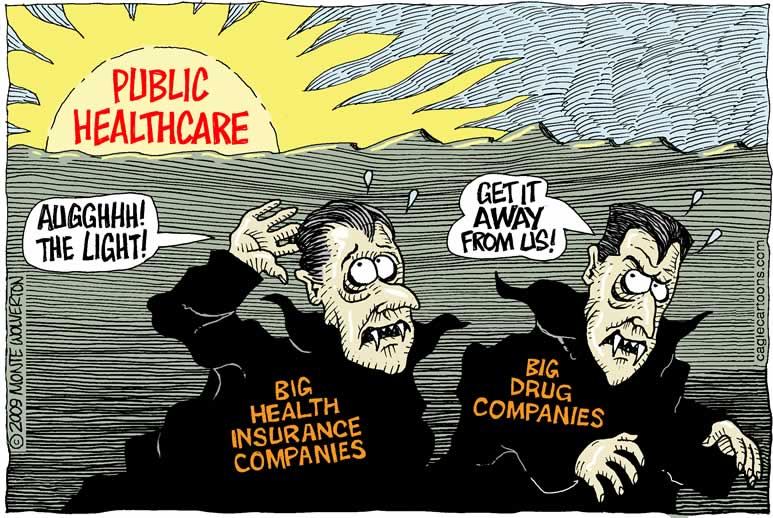
But, despite always having to be number one the United State ranks 37th in life expectancy in the world. Regardless of what Fox News would probably say we did not go from #1 to #37 when “Obamacare” was put into law. In fact, the new healthcare law is trying to combat some of the very reasons why we are ranked number 37.

In truth the U.S. does have some of the best healthcare in the world. The only problem is that it isn’t for everyone. It is easy to find these disparities. A quick look at the decline in cancer deaths in the U.S. is one example. Although cancer deaths are declining inequalities persist. Elizabeth Ward of the American Cancer Society, states “‘People of a lower socioeconomic status are more likely to smoke and less likely to get access to care where they can get screened for early detection.*’" Without giving everyone access to healthcare, including preventative healthcare, these discrepancies will continue and we can continue to chant “we’re number 37!”

In the latest finding from the Institute for Health Metrics and Evaluations at the University of Washington it was concluded that in many parts of the country life expectancy is declining. Two of the biggest factors? Obesity and smoking. Although the U.S. ranks #1 in spending on healthcare, the way healthcare is done now its not reaching everyone.

Some are less likely to get cancer. Some aren’t. Some life expectancy is going up. For others it is going down. If we really want to chant “We’re #1” we need to make healthcare more comprehensive, accessible, and affordable for everyone. Not just the rich.

*June 17, 2011 article from NPR
Also check out the report from the U. of Washington.

June 15, 2011

food wars

Is the next great political war food? It’s not an ongoing issue like the economy, jobs, or war, but it may be the next big thing. As we’ve found out in the past two years not everyone in the United States wants every citizen to have quality health insurance or any at all. The problem of course is that in the end our tax money that has to pay for the care of people that can’t afford health insurance or quality insurance ends up costing us more in the end. A fact sorely neglected by many people. This same idea has shifted to the food wars.

I first took notice of the food wars when the First Lady, Michelle Obama, began advocating for food change and policy. The changes: the basic idea is nutrition education. Other aspects are providing better school lunches, farm-to-school school programs, less deserts, more food security, etc. This all sounds good to me. Apparently though this is infringing on people’s “rights” to get fat and have more heart attacks and cases of diabetes, the first and sixth leading causes of death in the United States respectively.

Former half-term governor, tv star, book selling, motorcycling, history expert Sarah Palin retorts to the First Lady, “get off our backs” in response to the Let’s Move program. I guess moving is too much to ask.

I’m not surprised by Sarah Palin and millions of others like her who are upset about the idea of better food programs and education to help people eat healthier. I’m surprised, because in a time where it seems cigarettes, something that was widely celebrated in the United States at one point in time, is widely attacked by city, state, and federal laws. Of course cigarettes are not illegal, but in many places such as restaurants, schools, hospitals, public buildings, and now even parks, parking lots are even banning cigarette smoking. Cigarettes are heavily banned in many places, there is hardly any advertising, it is taxed enormously, and it has wiped out the tobacco industry. And people on both sides of the line seem okay with it. Cancer awareness advocates can be proud.

Even more surprisingly to me is the idea that someone like Ron Paul can advocate that a dangerous drug such as heroin should be legal. His logic? Well, if we made it legal no one would use it. The same logic could be used for murder but we wouldn’t make that legal, would we? The government makes a drug like heroin illegal not to infringe on people’s rights, but to protect people from a drug that has damaging effects to a person’s brain as well as possible dangerous effects to family, friends, and strangers.

Doritos, McDonald’s hamburgers, and fried foods are never going to stop being sold. But it would be nice to educate people that a slice of pizza does not have a serving of vegetables, or that drinking a bottomless amount of soda or sports drinks is not good for people, especially adults. If initiatives such as Let’s Move teach children to eat healthier and help small farms bring food to schools - in turn helping the next generation to have less heart disease and diabetes - I’m all for it. Nutrition and what we choose to eat is vital to a healthy life style and the ways it affects our body for good or bad.